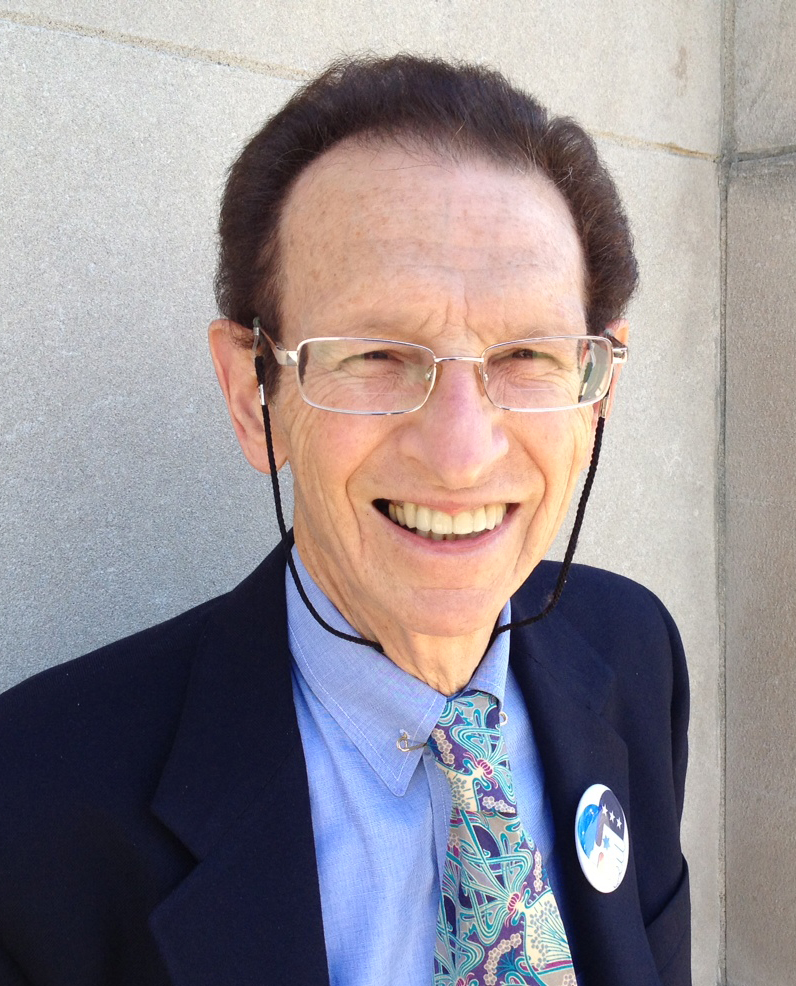
Breaking Bread on Broad: Helping Our Community by Jeremy Schmidt, congregant

One woman and her reticent seven year old child came in because she saw the chalk and balloons from the street. We invited her in, and gave her daughter a meal, and after she devoured a bagel, we gave her more. The way they ate said they hadn’t eaten in a while. When I told her she could have more, her eyes brightened. Then, we sat and played Penny Pack with the deck of cards, and then the teen leaders taught her Rummy, which I had taught them. She asked her young daughter to decide whether she wants to stay for a bit. After some food in her belly, the daughter was more social and said, “I’ve made my decision.” Then she pulled up a chair next to me. We sat and played the card game that her mother had been playing with the interns. I invited both of them into the library, and had her take books to read for herself, or for her child. She said under her breath, “thank God, this program exists, something positive like this exists, because I would have gone somewhere else I shouldn’t have gone today.
But I’m here.” I welcomed her back and said the doors are always open.

A Latino family came in clutching a flyer that I had passed out at Spring Garden Elementary, and the hands of two kids. The parents didn’t speak any English. We had the interns effortlessly include the kids and involve them in their games. I speak Spanish, so I managed to learn from the parents that they were just on their way to receive social security benefits and figured they’d stop in for the kids’ breakfast before a long day. Eric, the chairperson of Breaking Bread on Broad, put on Bachata music, and the parents’ faces morphed from a glazed-over look to two happy smiles.

How to Move the Right Heart at the Right Time

Davar Acher By Cantor Erin R. Frankel (as posted on ReformJudaism)

When, in Exodus 25:1-2, Torah tells us “The Eternal One spoke to Moses, saying: Tell the Israelite people to bring Me gifts; you shall accept gifts for Me from every person whose heart is so moved,” the text manages to be both inclusively open and exclusively specific. We tend today to read this invitation as an equalizer; no matter the gift, God will accept it. The most important quality of the gift is the zeal of the giver to share it. But building the Mishkan required specific materials: gold, silver, copper, fine linen, dolphin skins, for example. Any gift not found on this list would not be of much use. Did every Israelite possess something on this list?

Not all gifts are equal in value. Not all materials are central to a project. In making a request of the community, sometimes we are not specific enough about our needs, for fear of offending those who may not feel included. But in valuing willing energy over specific skill, we lose the opportunity to empower those who could rise to lead.

In this opening instruction of the parashah, Torah also clearly struggles with how to word such a request. How does a developing community welcome and include all while also elevating some over others? Did the community really want all gifts or only the ones most relevant to the task?

Perhaps the text hoped to move the heart of the individual who would hear and understand that she had a valuable contribution to make, in material or skill. When the details of a project speak to your particular strengths, you are required to step up and participate. We must be willing, when the call comes, to evaluate ourselves and know when it is our time to lead. Do not fear the display of confidence or bounty. The success of the community relies upon your heart being moved at the right time.

Cantor Erin R. Frankel serves Congregation Rodeph Shalom in Philadelphia.

3/04/2017

Shabbat With Noah Aronson

Shabbat with Renowned Composer & Musician, Noah Aronson, on Friday, December 2 @ 6pm
Sponsored by the Miles Jellinek Memorial Fund

“Noah Aronson performs with joy, passion and a rich musicality that connects with audiences, heart-to-heart and soul-to-soul”(Anita Diamant)
We are priviledged to have the extrememly talented composer and vocalist, Noah Aronson, join us for a Shabbat Service.   He will enhance our service by collaborating with Makheilah: The RS Choir and our Youth Choir, and by sharing his music.

Join us for a community dinner following the service (RSVP) and a cafe style concert with Noah Aronson.

Listen to Noah’s beautiful “Eileh Chambdah Libi”


Ben-Zion’s 80th Birthday Greetings

 ben-zion-freedmanGirls and boys , we have won a lottery ! Yes , we have won a lottery. Which one , you wonder ? The SUPREME lottery . . Being  Born ! Experiencing Existence ! Living Life ! Truly , a once-in-a-lifetime surprise prize !

Are you not amazed . . RADICALLY AMAZED . . . at being born . . feeling blessed and thankful at being alive . . experiencing  existence . . . blessed with intelligence and self-awareness .

Here’s more good news: social relationships . . living inter-connected.  We are all related, all members of this big family Homo sapiens sapiens: human beings, with intelligence , with feelings .

Now, None of us asked to be born . . yet, here we are !  HERE WE ARE: The Lucky Ones ! Blessed with birth; given the Gift of Life ; ! Especially today, I am HIGH on CHAI . Rabbi Abraham Joshua Heschel taught: “our goal should be to live life in Radical Amazement . . Everything is phenomenal . . . Never treat life casually; always be amazed” , says Heschel .

Continue reading

RS Common Ground Farmers’ Market

scone

Important Facts About the Common Ground Farmers’ Market

  1. Well, it’s a farmers market. So that means all of your produce is fresh and local. It also means that you can ask the farmer exactly how it’s grown, so you know you’re not getting a weird pesticide cocktail, or a peach that seventy different people stuffed in their pants as a joke which really ends up being on you.
  2. It’s located in what’s called a “food desert,” which means that it brings fresh produce to an area where people don’t have access to healthy, wholesome, affordable food stores.
  3. It’s also one of the only markets that accepts EBT cards. As a person who has received food assistance, I can tell you that being able to use them at a farmers market would have made a drastic difference in the amount of fresh fruit and vegetables that I bought.
  4. There are demonstrations on how to pickle. FREE demonstrations. No one else is going to teach you how to pickle things for free. No one.
  5. The farmers will know you, and they will remember what you bought, and they will make personalized recommendations. You may think ‘why would I want that?’ but you do want that. Trust me.
  6. If you make an effort to shop at Common Ground, the farmers will stay, and it will continue to bring healthy, affordable options to an area that otherwise has none. You—yes you—will be personally responsible for bringing nutrition to people.

Continue reading

A Prayer for Love

Delivered by Cantor Frankel on June 17:

Hashkiveinu Adonai Eloheinu L’Shalom, V’haamideinu Shomreinu L’chayim, Let us lie down in peace O God and rise up, our guardian, to life renewed. We pray for protection, that in our most vulnerable moments we won’t have to focus on just how vulnerable we can be… And then we’re reminded how our sense of safety, how the sense of safety of those who have worked for equality and acceptance, can be rocked to its core.

Where is the symbol of God’s brit, God’s covenant, with all of us in those moments? Where is the rainbow?

After God destroyed the world in the flood, saving Noah and his family to continue human kind, God chose the rainbow to be a symbol of the promise not to destroy humanity again. The rainbow is so beautiful, it appears magically and without warning, it’s colors share space harmoniously in such a way that all kinds of people seem to be represented in its bands.

But as a symbol the rainbow is more than just beauty and harmony. It is a reminder of a two-way covenant, a reminder of the part we must play in repairing a world that after Orlando once again seems so broken.

There is such fear and shock after last weekend’s events. Such pain in the LGBTQ and Latino communities.

So we must remember the rainbow, and repeat the question, as Sen. Chris Murphy did on the Senate floor this week, “What can you do? What is your part?”

We pray for protection, we pray for peace, we pray for tolerance, we pray for sanity, we pray for the day when cultural differences, sexual equality, and gun control are all accepted, because on that day we all will agree, as Lin-Manuel Miranda said at the Tony awards last week, that love is love is love is love is love.

Remember the rainbow, remember the covenant. What is your part?

RS in the URJ Resource Guide

Fran Martin’s article on Boomers at Rodeph Shalom was just published in URJ’s A Resource and Discussion Guide to Move Your Congregation Forward.

Boomers in Transition: How Our Synagogue Meets the Needs of New Empty Nesters

It had the makings of a perfect storm.

In 2008, I joined Congregation Rodeph Shalom in Philadelphia.

That same summer, at a synagogue get-together of BoomeRS – members who gather for social, spiritual, and educational opportunities at Rodeph Shalom and beyond – many in the group realized they all had children who were about to leave for college.

The BoomeRS came up with the idea that Rodeph Shalom ought to offer a discussion series about becoming empty nesters. Although I was a brand new member of the synagogue, the director of community engagement asked me – knowing about my training as a psychologist and my experience working with families – if I would lead a discussion series on “Becoming Empty Nesters.” I loved the idea and before long, we were off and running.


That fall, we scheduled four sessions of the new series, and I created a syllabus to guide the discussions. More than 20 men and women, most of whom did not previously know each other, attended our first session. Throughout the series, we addressed such topics as separation and individuation, effective communication, resilience, and understanding emotions – both our own and others’. Over time, our meetings provided a forum in which members could tell their own stories, not only sharing thoughts, feelings, and experiences related to having a newly empty nest, but also creating unique bonds and connections with each other.

As we approached the end of the series, we heard positive feedback from our participants: Everyone wanted more. We added a fifth session and invited recent graduates and young adults to tell us about their challenges and ways parents could be helpful. As with the earlier meetings, it was the personal stories that connected participants to each other, and ultimately, we agreed to meet monthly for the rest of the year.

We have been meeting ever since.

In 2011, we changed the group’s name to “BoomeRS in Transition,” which more accurately reflected the issues that concerned us. We also conceded that we were part of an inescapable trend: Despite efforts to include everyone from the congregation who wished to join us, we seemed to attract only women. Although we never intended an all-female membership, ultimately, we accepted that we were, in fact, a group of boomer women.

Today, we meet approximately every six weeks from September through May, with one summer gathering at a member’s pool club or shore home. Our membership includes a handful of women who were participants in the original “Becoming Empty Nesters” discussion group, and they are the foundation of our group, but we continue to grow and evolve in myriad ways. Numerous members of our group have taken on leadership roles within the congregation, and we have generated at least one spin-off group, which meets specifically to discuss issues around dealing with aging parents.

In our group, though, the meetings are, as they have always been, a place for people to be heard, to tell their own stories, and to create unique bonds and connections. We have new members who come, meet others, and develop relationships that form the foundation of their membership at Rodeph Shalom. More seasoned synagogue members come to see old friends, and to let us know what is going on in their lives. Although every session is different, we always take time to report on how we’re doing, and no one – whether a first-time attendee or a longtime member – ever leaves feeling alone.

Although initially we set out to create a group for empty nesters, it evolved into a place where both new and seasoned members can make and maintain real and profound connections that allow us to be our truest and best selves. As our group continues to grow and change, we are confident that the wisdom we have gleaned from our past experiences will guide us in creating new opportunities to engage, both with each other and within the larger Rodeph Shalom community.

Fran Martin is a psychologist who has facilitated the Boomers in Transition group at Congregation Rodeph Shalom in Philadelphia, PA, since 2008. She also is a co-chair of community engagement at the congregation.
Continue reading

Creating Profound Connections

The leadership at RS takes our tagline, “creating profound connections” seriously. With close to 1200 families we are compelled to think about how we are living up to this vision whether it be in our relationships with one another, the opportunities we create, the community we strive to build and/or how we support one another throughout our lives. Below Marge Piercy shares her insights about how complex and intricate a process it is.

In our attempt to harness the power of technology in the 21st century to help us (along with all our other tools) achieve our vision, please look for 4 emails asking for your help in teaching us how we can be more effective in creating profound connections for every member of our community.

Thank you in advance for your help,
Catherine Fischer, Director of Community Engagement

Connections
By Marge Piercy

Connections are made slowly, sometimes they grow underground.
You cannot always tell by looking at what is happening
More than half a tree is spread out in the soil under your feet.
Penetrate quietly as the earthworm that blows no trumpet.
Fight persistently as the creeper that brings down the tree.
Spread like the squash plant that overruns the garden
Gnaw in the dark, and use the sun to make sugar.
Weave real connections, create real nodes, build real houses.
Live a life you can endure: make life that is loving.
Keep tangling and interweaving and taking more in, a thicket and bramble
wilderness to the outside but to us it is interconnected with rabbit runs and burrows and lairs.
This is how we are going to live for a long time: not always.
For every gardener knows that after the digging, after the planting, after the long season of tending and growth, the harvest comes.

RS Women’s Heart Health Symposium

The RS Women hosted a Heart Health Symposium on February 7. A panel of experts shared their insights and fielded our questions. Here is a summary of the panel:

Rabbi Jill Maderer gave a spiritual welcome: No “shaming” here just support , education and advocacyJennifer Hudson Fight the Ladykiller–a powerful message in an introductory video..

Doctors Lillian Cohn, Internist and Nazanin Moghbeli, Women’s Cardiology Takeaways :

  • HEART DISEASE IS THE NUMBER ONE KILLER OF WOMEN
  • It is important to know your “numbers”: BP Hypertension a major risk factor. (It is advisable to ask for a second BP reading in office. While standing.)
  • NUMBERS TO KNOW: HDL (good) LDL (bad) Cholesterol,Triglycerides, Hemoglobin A-1 C if you have (or are at risk for) Diabetes, BMI for weight maintenance/ obesity prevention
  • KNOW YOUR FAMILY HISTORY to share with physician
  • BE SURE YOUR PHYSICIAN SHARES ALL YOUR NUMBERS WITH YOU
  • Comprehensive evaluation recommended every 3 years if healthy. But preferable every year.
  • Healthy Lifestyle/ Diet/Exercise/no Smoking mitigate risks!
  • Advisable to worry less about side effects of Rx Statins. Focus on cholesterol numbers and the benefits of statins.
  • Women’s arteries/vessels are smaller than men’s. Women at higher risk of stroke. Plaque is softer. More easily dislodged. (Men’s harder more calcified.)
  • Hearts of younger women believed to be protected by estrogen. However from menopause and beyond not so. HRT—hormone replacement therapy—is very much questionable post menopause and must be discussed thoroughly with physician.
  • Pregnant women with pre-eclampsia are at greater risk for cardiovascular disease.
  • Symptoms of heart attack in women can be very different from men (ie back pain, nausea) or can be the same as men. (Chest pains, shortness of breath.)

Dr. Raina Merchant, Emergent Cardiology: “Staying Alive” CPR video: CRITICAL INTERVENTION FOR CARDIAC ARRESTS. TIMING LIMITED AND DIFFERENCE BTW LIFE AND DEATH.

  • CPR greatly simplified recently. No more mouth to mouth. Just call 911 and do chest compressions.
  • Portable AED at RS is at Mt Vernon stairs.
  • There is a science to “broken heart syndrome” has to do with imbalance in the parasympathetic nervous system. Can also explain how a surprise party can cause a heart attack.

Findings of recent studies on Depression as a risk factor are mixed, however panelist Dr Bill Uffner, psychiatrist, shared a powerful story about his rounds as a resident in the early 70’s with the renowned cardiologist, Dr Williamm Lykoff. None of Dr Lykoff’s residents then answered his question correctly: “What is the number one predictor of heart disease”. The correct answer was Depression!
Dramatic Psychosocial changes post attack greatly increase risk of depression. Compromises treatment/ recovery and successful outcomes.

Thank you to Betsy Fiebach for organizing the symposium and for the summary.

The National Museum of American Jewish History is offering free admission to all visitors throughout the month of February. Thanks to the support of an anonymous donor, the Museum will welcome all visitors to explore more than 360 years of American Jewish history. Not only will visitors be able to enjoy the entire core exhibition, but also they will also have a chance to see the original, iconic 1790 letter from George Washington to the Hebrew Congregation in Newport, Rhode Island, in which the nation’s first president proclaims “to bigotry no sanction, to persecution no assistance,” underscoring the new nation’s commitment to religious liberty and equality for people of all faiths.

Second Sunday
Family Activities
On Sunday, February 14 from 10 am to 3 pm join us for our Second Sunday Family Activities. In the spirit of the Free Library of Philadelphia’s One Book, One Philadelphia program, which promotes reading and literacy for all ages, families are invited to grab a book and relax on a couch or comfy chair, or to find a cozy spot in the galleries to read together. Families can also make creative bookmarks to take home and use when reading some of their own books!

NMAJH Celebrates Freedom with Free February

The National Museum of American Jewish History is offering free admission to all visitors throughout the month of February. Thanks to the support of an anonymous donor, the Museum will welcome all visitors to explore more than 360 years of American Jewish history. Not only will visitors be able to enjoy the entire core exhibition, but also they will also have a chance to see the original, iconic 1790 letter from George Washington to the Hebrew Congregation in Newport, Rhode Island, in which the nation’s first president proclaims “to bigotry no sanction, to persecution no assistance,” underscoring the new nation’s commitment to religious liberty and equality for people of all faiths.

Presidents’ Day at NMAJH

Monday, February 15 from 10:00 am – 5:00 pm

Celebrate Presidents’ Day at the Museum and explore how American leaders impacted history, American society, and the American Jewish community.  Meet George Washington and examine his original letter written in 1790 to the Jewish community of Newport, Rhode Island, declaring the importance of religious freedom.Have fun with interactive story telling, and enjoy arts and crafts projects. Take history in your own hands!